

Eastern Oregon Correctional Institution Validates ContraSCAN® in Operational Prison Trial

Real-world correctional facility trial demonstrates operational value of frontline synthetic cannabinoid screening technology

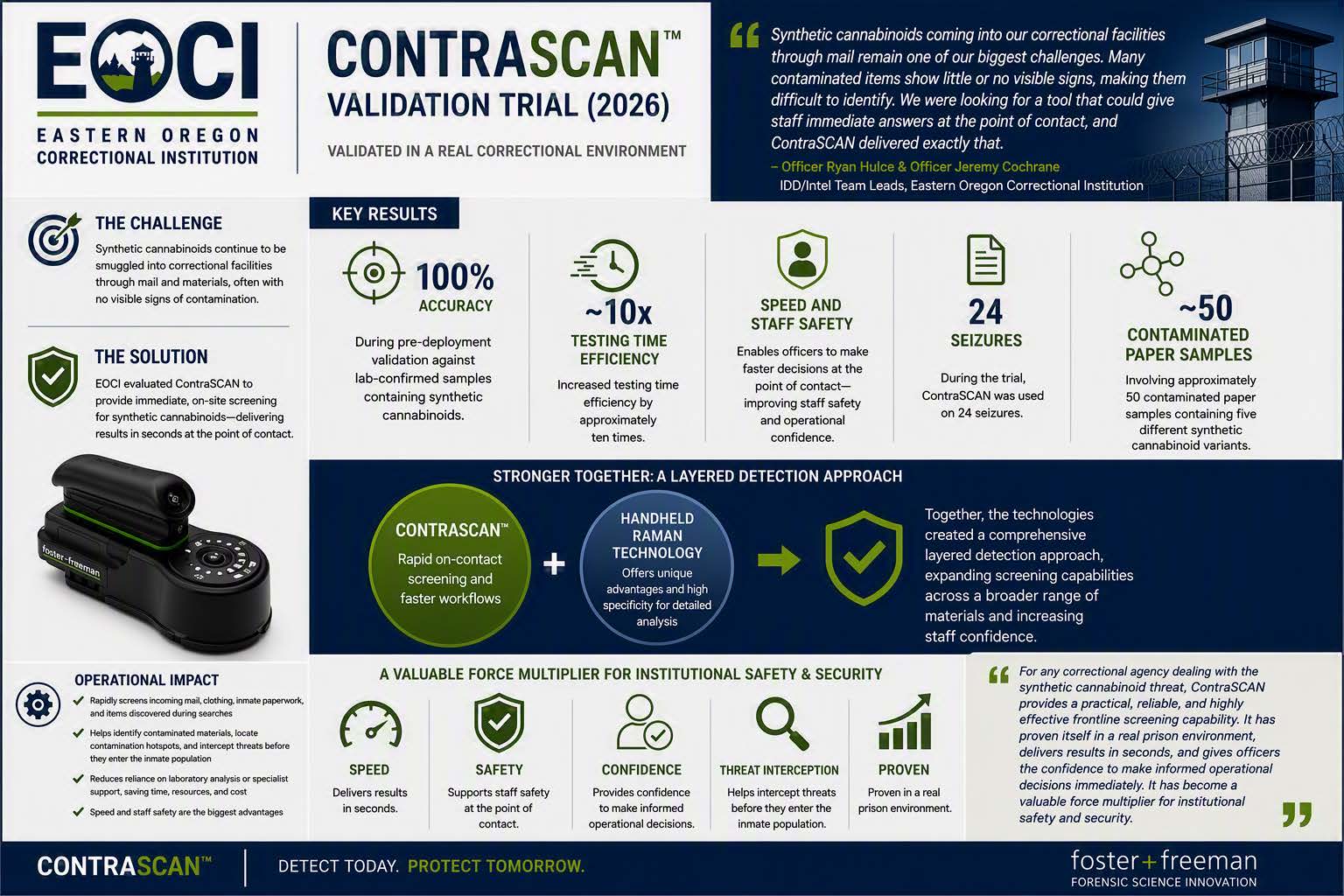
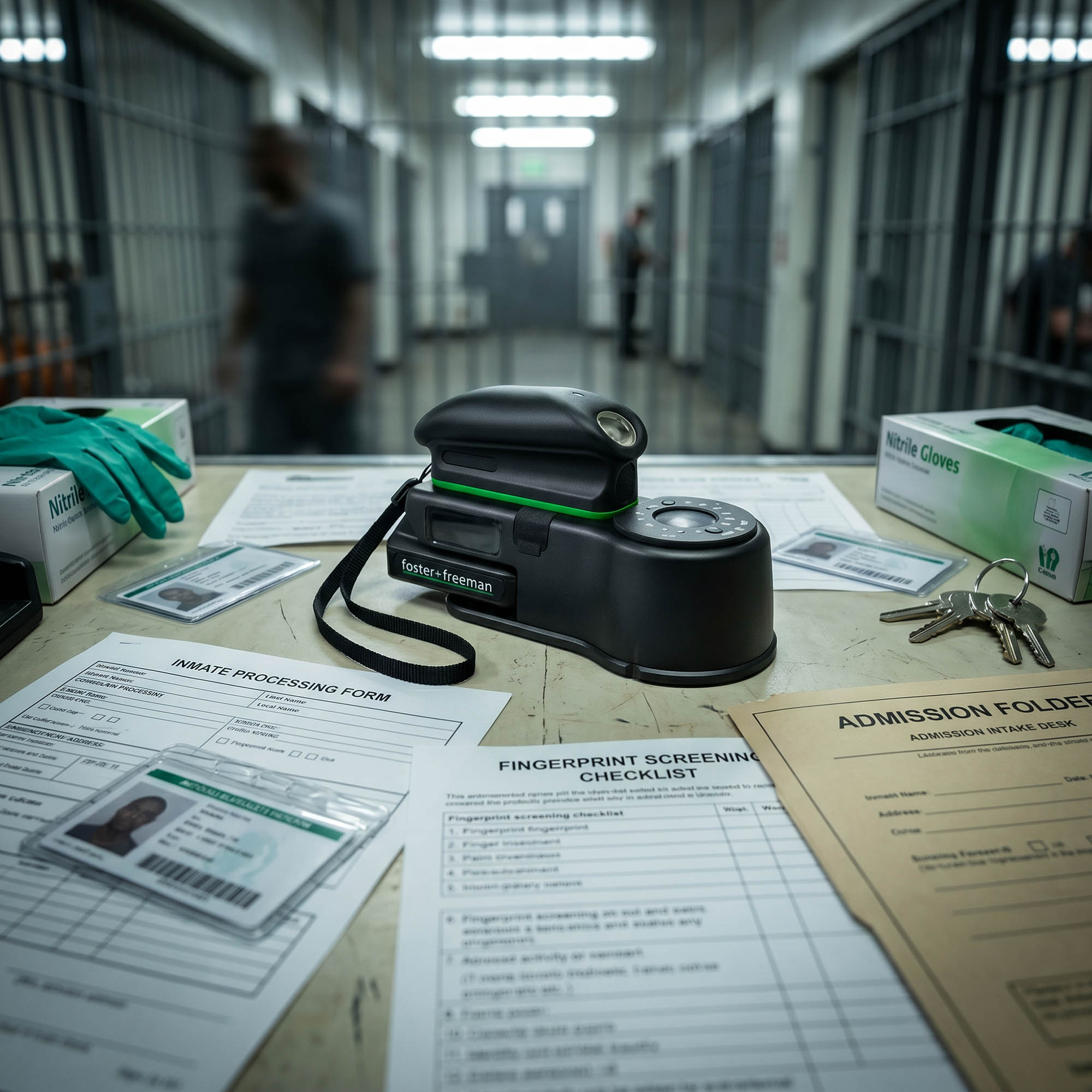
ContraSCAN® has successfully completed a two-month operational evaluation at Eastern Oregon Correctional Institution (EOCI), demonstrating the system’s ability to rapidly identify synthetic cannabinoids in inmate mail and other materials encountered within a correctional environment.

Conducted within a live correctional environment, the trial assessed ContraSCAN®’s ability to support prison staff in identifying contaminated items quickly and safely at the point of contact. The evaluation was undertaken in response to the growing challenge of synthetic cannabinoids entering correctional facilities through mail, paperwork and personal property, often with little or no visible indication of contamination.

Prior to operational use, EOCI validated the system against laboratory-confirmed samples containing synthetic cannabinoids. During this phase, ContraSCAN® achieved 100% accuracy, providing correctional staff with confidence in the technology before deployment into day-to-day screening activities.

During the trial period, officers used ContraSCAN® in 24 separate seizure investigations involving approximately 50 contaminated paper samples containing five different synthetic cannabinoid variants. Results demonstrated the device’s ability to rapidly identify contaminated materials within seconds, allowing officers to make informed operational decisions without waiting for laboratory analysis.

According to EOCI’s Intelligence and Drug Detection team, the introduction of ContraSCAN® delivered a significant improvement in operational efficiency, increasing testing throughput by approximately ten times while enhancing officer safety and confidence. Staff were able to screen incoming mail, inmate paperwork, clothing and items recovered during searches more quickly than previously possible, helping to identify contamination hotspots and intercept threats before they reached the inmate population.
“What previously required lengthy analysis could now be completed in seconds. The system was straightforward to use, easy to integrate into our existing workflows, and increased our testing time efficiency by approximately ten times.”
Officer Ryan Hulce and Officer Jeremy Cochrane
IDD/Intel Team Leads, Eastern Oregon Correctional Institution
The institution reported a significant increase in operational efficiency, with testing throughput improving by approximately tenfold. Officers were able to screen incoming mail, inmate paperwork, clothing and items recovered during searches rapidly at the point of contact, helping to identify contaminated materials before they reached the inmate population.

The trial also highlighted the benefits of a layered detection strategy. EOCI found that combining ContraSCAN® with handheld Raman technology expanded screening capabilities across a wider range of sample types and increased confidence when assessing suspected contraband materials.
Commenting on the wider impact of the trial, EOCI’s intelligence team described ContraSCAN® as a practical and highly effective frontline screening capability that had become a valuable force multiplier for institutional safety and security. Officers noted that the ability to receive immediate results encouraged more proactive screening and supported faster operational decision-making.

The successful completion of the EOCI trial represents another important milestone for ContraSCAN®, demonstrating the technology’s ability to deliver fast, reliable and operationally relevant screening performance in a real correctional environment 
 

forensic drug solutions

ContraSCAN

LEARN MORE

Today, the prison mailroom is the critical frontline in the fight to prevent illicit substances, including powerful and deadly synthetic cannabinoids, from entering correctional facilities.

Organised criminal gangs are exploiting the prison mail system by spraying or dissolving powerful synthetic substances, like K2 and Spice, into paper to bypass the manual screening process.
Learn more >