Recent AZDPS Study Validates the Crime-lite Auto for Advanced Serology Casework
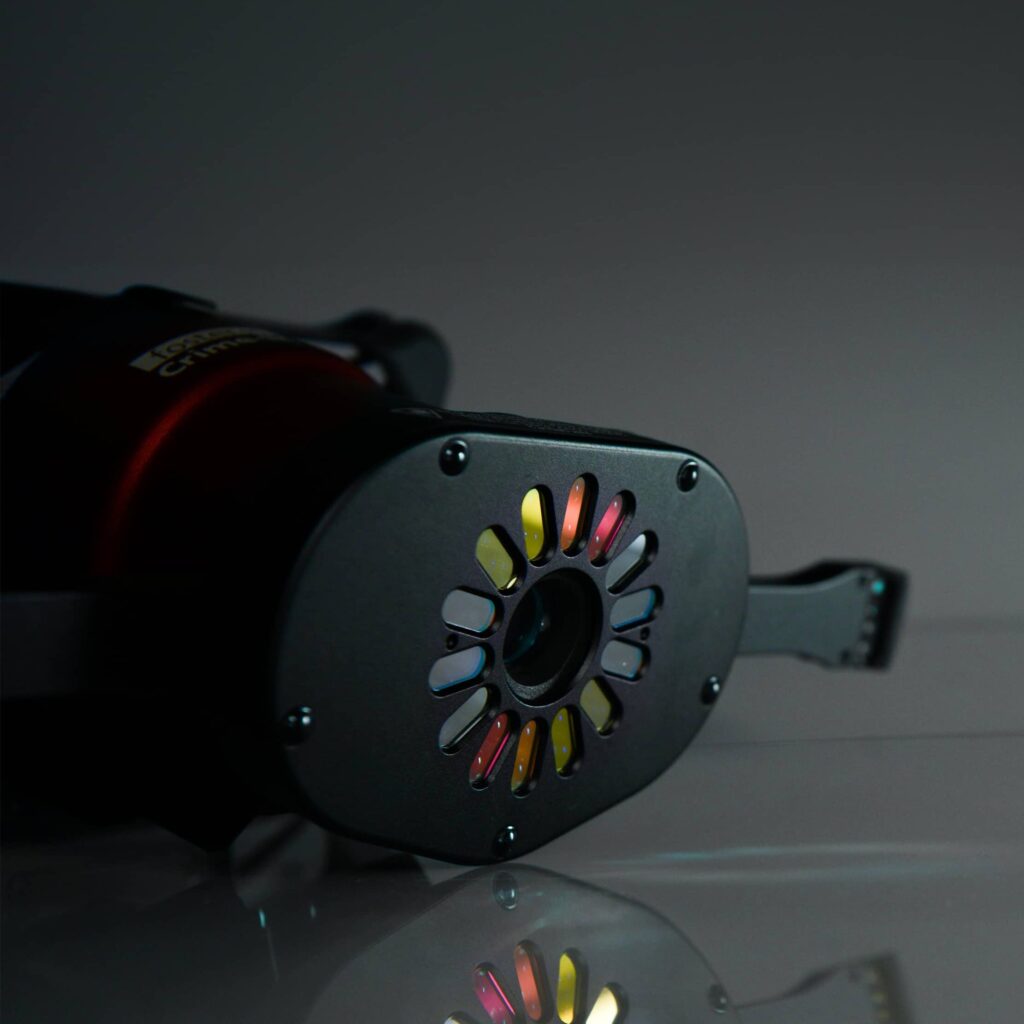
An independent primary validation study by the Arizona Department of Public Safety (AZDPS) Crime Laboratory has formally approved and recommended the foster+freeman Crime-lite Auto for active forensic casework, demonstrating its superior ability to uncover trace body fluids on heavily autofluorescent substrates.
Overcoming the Challenge of Substrate Autofluorescence
Forensic serologists have long battled the persistent challenge of substrate autofluorescence during evidence screening. Brightly dyed modern garments, complex multi-coloured patterns, and highly reactive synthetic fabrics frequently glow intensely under standard alternative light sources, completely obscuring or masking latent stains of blood, semen, and saliva.
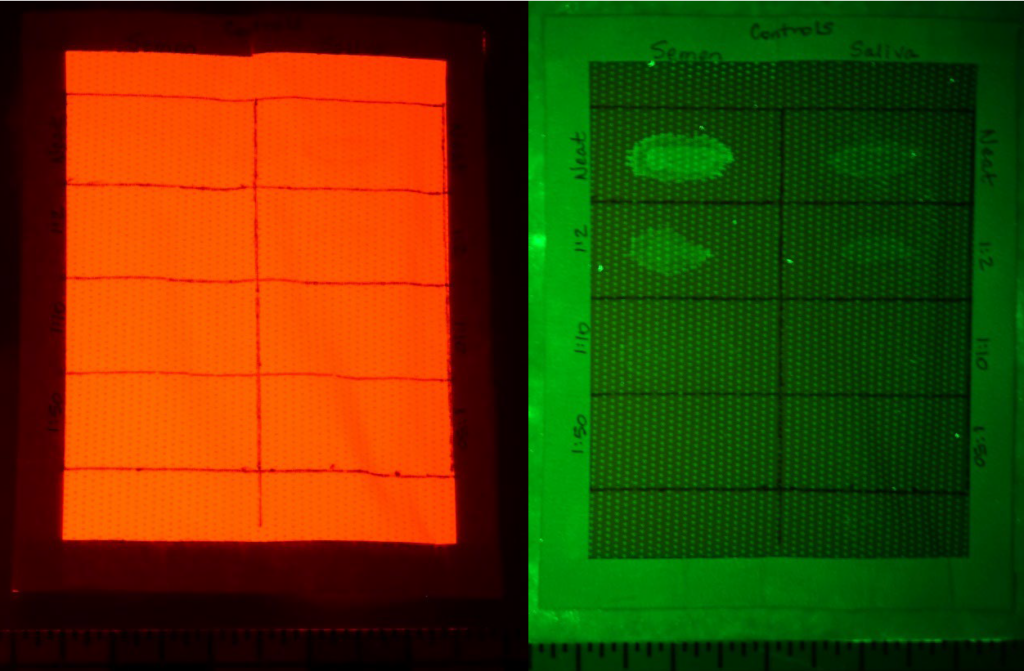
To evaluate a technological solution to this severe operational bottleneck, 14 expert serologists across three AZDPS regional laboratories (the Central, Southern, and Northern Crime Laboratories) conducted a rigorous primary validation and performance check. The comprehensive study evaluated the Crime-lite AUTO against legacy screening instrumentation, utilizing a demanding range of body fluid dilutions from neat concentrations down to a highly challenging 1:50 dilution. These control samples were deposited onto notoriously difficult textiles, including multi-coloured leggings, complex leopard-print dresses, neon pink garments, and dark denim, to mimic the toughest real-world casework conditions.
Unlocking Ultimate Contrast
The independent study highlighted the immense power of the Crime-lite AUTO’s specialized bandpass filtering physics when isolating latent evidence. While traditional forensic screening relies heavily on broad longpass options that frequently allow background fabric glare to bleed into the final image, the Crime-lite AUTO’s bandpass filters isolate a tightly restricted window of wavelengths.
By completely repressing all light outside that specific target range, the device successfully silences background fabric fluorescence and vastly magnifies the contrast of the target biological stain. During the validation, this advanced filtration allowed analysts to pinpoint highly diluted 1:50 bloodstains on dark denim with sharp edge definition and distinct boundaries, whereas traditional screening methods failed entirely. Similar success was achieved on highly reactive neon pink fabrics and multicolored garments, where the specialized bandpass filters easily broke through intense fabric glare to clearly reveal latent semen and low-fluorescence saliva deposits.
Data-Driven Screening with the Product Verification Library (PVL)
The AZDPS validation team heavily praised the operational impact of the built-in Product Verification Library (PVL) software integration. The PVL is the real-world software manifestation of foster+freeman’s intensive 2.5-year Ground Truth Study, which analysed multiple body fluids across 310 diverse garment types to generate an extensive baseline database of over 18,910 forensic images. In practice, the PVL software completely eliminates manual user guesswork from the laboratory workflow. An analyst simply selects the specific substrate colour and the target fluid on the Crime-lite AUTO interface, and the intelligent system instantly provides five data-backed, optimized lighting and filter combinations. The AZDPS scientists noted that the PVL regularly unlocked optimized, highly effective settings that exceeded standard protocol expectations, such as revealing 100% of latent stains on complex denim targets while entirely cutting out secondary fibre fluorescence.
Maximizing Workflow Efficiency and Precision in the Crime Lab
Beyond its optical excellence, the validation underscored several critical operational advantages that make the Crime-lite AUTO a transformative tool for modern, high-throughput forensic laboratories. Functioning as a fully integrated digital SLR camera system, the Crime-lite AUTO delivers exceptional image resolution and precise exposure controls, ensuring that fluorescent rulers—which frequently became overexposed and unreadable under older units—remain perfectly crisp and legible in documentation photographs. Additionally, the device streamlines evidence processing by utilizing motorized focus and exposure controls, entirely removing the manual physical adjustments required by legacy instrumentation. Ultimately, by visually isolating trace stains on complex, non-flat, or highly patterned evidence, laboratories can significantly minimize their reliance on time-consuming “blind swabbing” or chemical mapping protocols, allowing analysts to target downstream DNA testing exclusively to verified zones. Following this exhaustive evaluation, the Technical Lead concluded that the Crime-lite AUTO is a robust, casework-ready tool that consistently performs equal to or better than legacy forensic platforms.