CRIME-LITE APPLICATIONS //
Utilising Crime-lites for The Detection of Challenging Bloodstains
Background
Introduction
Blood is often a critical form of forensic evidence. Its analysis can aid in reconstructing events at a crime scene, identifying individuals, and potentially linking suspects to criminal activity. On light-coloured surfaces, blood is typically easy to detect due to the strong contrast it creates against the background. However, detecting blood on darker substrates presents a greater challenge, as both the blood and the surface absorb significant amounts of visible white light—resulting in minimal contrast when using standard white illumination.
Overcoming the issue
To overcome this limitation, a combination of alternate light sources (ALS) and appropriate filters can be used to reveal blood stains that may be faint or completely invisible to the naked eye. This can assist examiners with locating bloodstains on a surface and can aid in visualising the distribution of the blood on the surface as well.
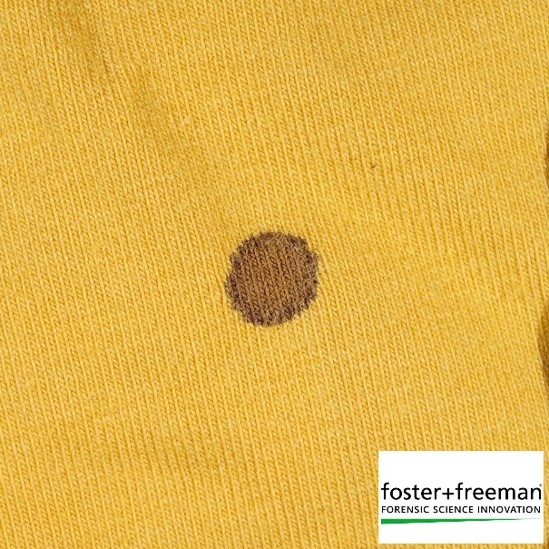
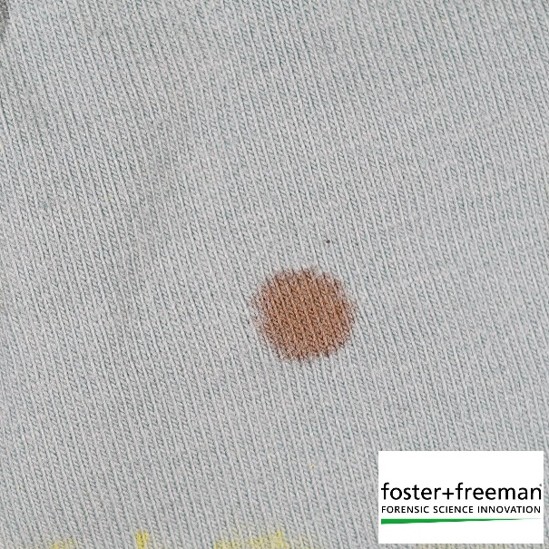
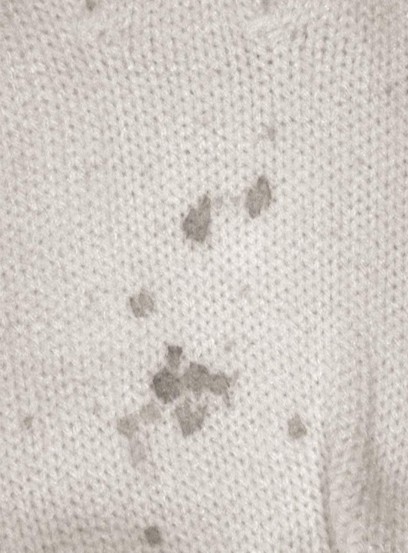
When blood staining is present on a light-coloured surface, it’s often very easily visualised, as shown in the above examples. Because the blood is much darker in colour than the surface, the contrast is visible to the naked eye.
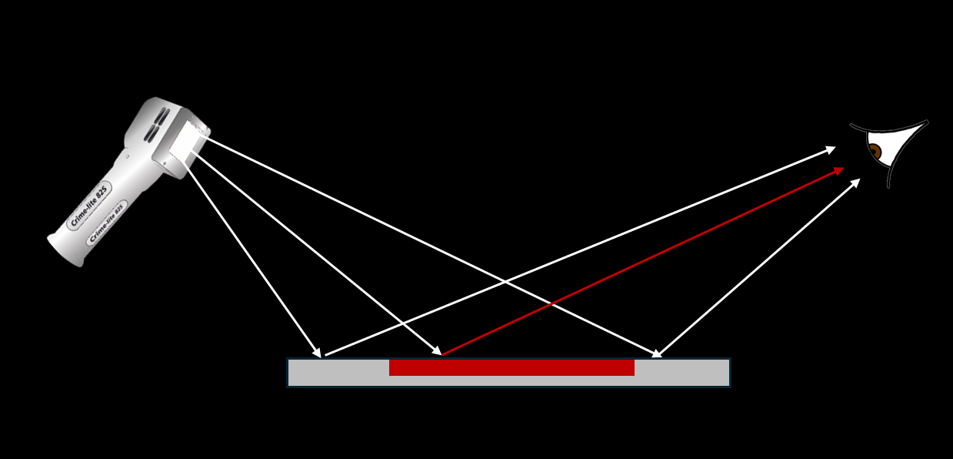
White light is made up of all wavelengths within the visible spectrum. When a surface is illuminated with white light, different colours on the surface absorb and reflect varying amounts of this light. The colours we see as the viewer are those that are reflected to the eye.
This optical principle is useful in for blood detection. Light-coloured substrates typically reflect a high proportion of the incident white light, therefore appearing light to the observer. This then creates contrast with dried blood absorbs which much of the light, resulting in a distinct red-brown appearance. This contrast is what gives visibility to bloodstains and facilitates the location of potential bloodstains during visual searches.
IR Examination
Infrared (IR) light reveals what standard white light can’t. While some surfaces may appear dark to the naked eye because they absorb a high proportion of visible light, they can behave very differently under IR illumination. Depending on the material and the dyes used, these surfaces may actually reflect IR light, appearing much lighter as a result.
This shift in contrast can be really powerful when searching for blood. As blood typically absorbs IR light, stains that are hidden or invisible under white light can become clearly visible against a lightened background in the infrared, making detection quicker, easier, and often far more effective.
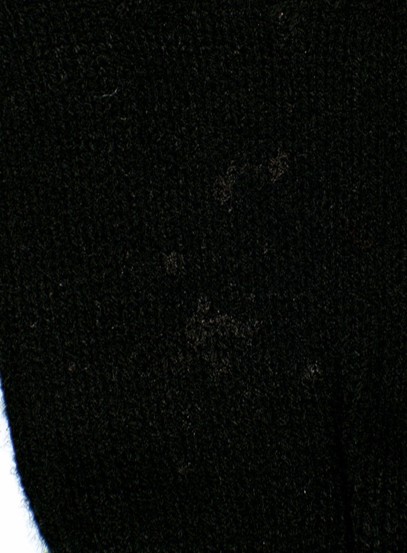
When viewed under standard white light, the dark surface shown here effectively conceals much of the bloodstaining present. However, when illuminated with IR light and observed using a full-spectrum camera and the appropriate filter, the true extent of the blood becomes immediately clear. The use of a full-spectrum camera is crucial, as the human eye is not sensitive to IR wavelengths of light.
Using a modified camera as featured in the Crime-lite® Auto or ML-Pro 2, examiners can harness this capability to locate and document bloodstains on dark or visually complex surfaces. Beyond detection, this method also reveals critical details about the distribution and patterning of the stains—providing valuable context to crime scene examiners.
Fluorescence Examination
Fluorescence is a powerful tool we frequently use when searching for forensic evidence. While blood isn’t typically considered to be fluorescent, this technique can still be highly effective and is often overlooked in blood detection.
In some cases, fluorescence can be induced in the substrate itself, causing it to appear to glow under certain wavelengths of light. This creates strong contrast, as the bloodstains remain dark against the illuminated background. In other scenarios, particularly with aged or degraded samples, it’s possible to stimulate fluorescence in the bloodstains themselves, making them easier to detect.
Whether by enhancing the background or highlighting the stain, fluorescence offers an additional layer of versatility in the search for blood evidence.
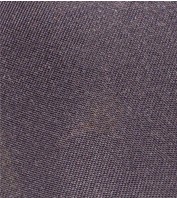
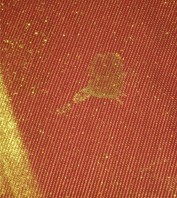
In this example, the bloodstain is completely invisible under white light. However, when examined using fluorescence, the stain itself fluoresces, making it stand out clearly against the background.
This technique can dramatically simplify the detection of otherwise hidden evidence. By enhancing visibility, fluorescence ensures that crucial evidence is not missed during examination, supporting a more thorough investigation.
Contrast Examination
Blood has a strong absorption peak at around 412nm—within the violet region of the spectrum. By illuminating a suspected area with violet light and viewing it through a matched bandpass filter, we isolate how the surface interacts specifically with this wavelength.
Under these conditions, bloodstains often appear significantly darker than the surrounding substrate, creating high contrast and dramatically improving visibility. This targeted lighting technique is a simple yet highly effective way to enhance the detection of blood evidence—especially in cases where stains may otherwise go unnoticed under standard white light.
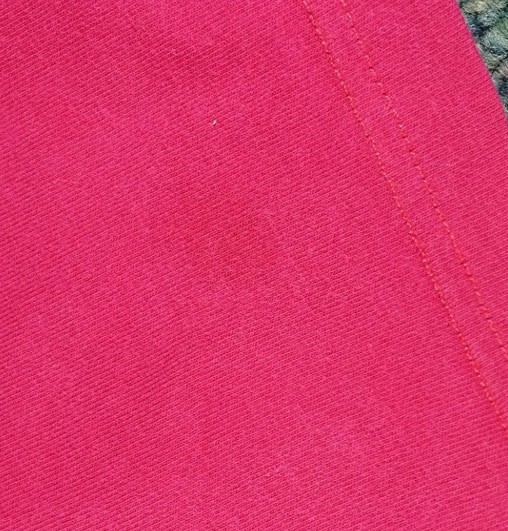
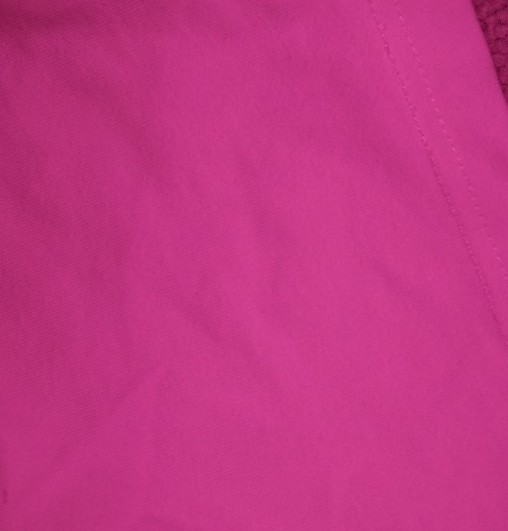
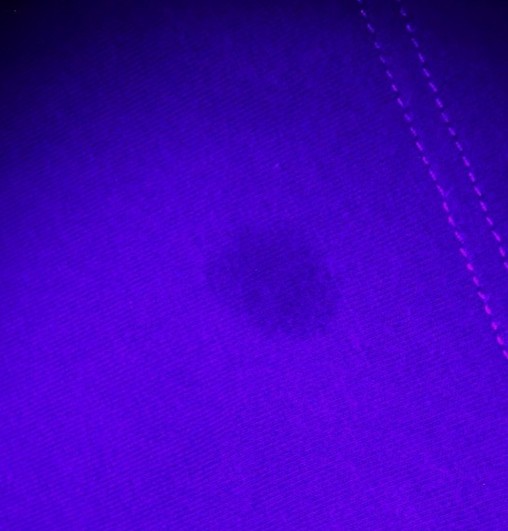
This image shows a small area of dilute blood staining. Under standard white light, the stain is very faint and could easily be overlooked during examination. Even when viewed under infrared (IR) light, no additional contrast is produced, and the stain remains invisible.
However, when the area is illuminated with violet light (around 410nm) and viewed through a matching filter at 415nm, the blood absorbs the light and appears significantly darker than the surrounding surface. This targeted wavelength technique creates high contrast, making the bloodstain clearly visible and easy to detect.
Products Featured
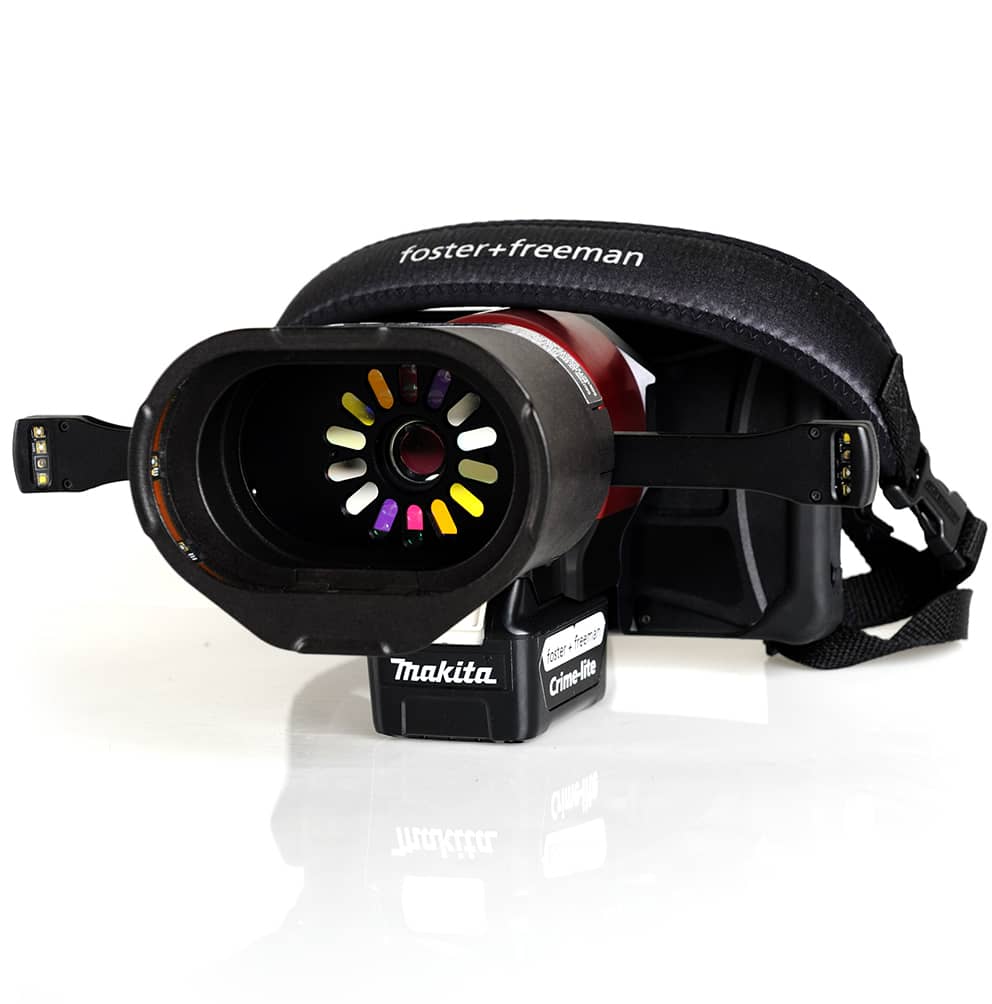
Crime-lite® AUTO
The Crime-lite AUTO is the most integrated, comprehensive, and compact forensics digital camera solution in existence. Combining the latest forensic imaging technology with high intensity multi-spectral illumination, the Crime-lite AUTO is a complete solution for the search, detection, and capture of forensic evidence.
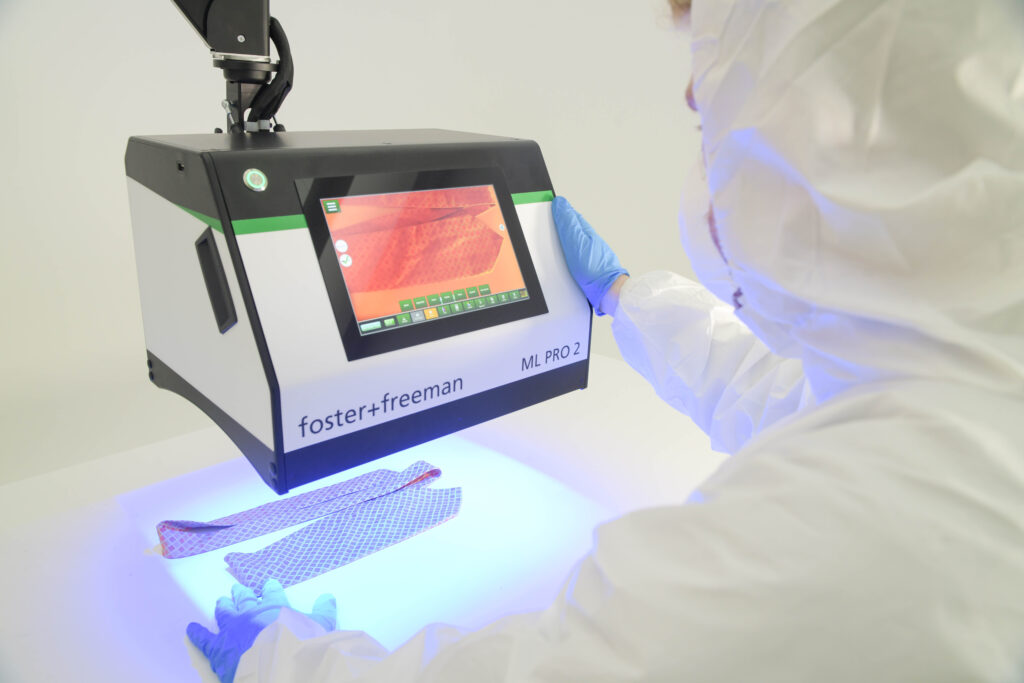
Crime-lite® ML PRO 2
Designed for laboratory-based forensic analysis, the ML-Pro 2 features a high-resolution camera with up to 30x optical zoom. Like the Crime-lite® Auto, the ML-Pro 2 is engineered to be sensitive to ultraviolet, infrared, and visible light.
The system includes user-friendly, evidence-specific preset scanning modes, allowing operators to initiate searches for particular evidence types with a single click. This streamlines the forensic examination process while maintaining a high level of precision and reproducibility.
More News
foster+freeman to Tackle Prison Drug Crisis with Launch of ContraSCAN™ Detection Technology
Strengthening Forensic Science Capabilities in Bolivia: Foster+Freeman and HANSA Expand Strategic Partnership
Advancing Forensics in Brazil: First DCS6 Installed in Manaus

Regional Sales Managers – Rebecca Nick

Regional Sales Managers – Alexis Dodson

Regional Sales Managers – Jason Cole

Regional Sales Managers – Walter Hiller

Regional Sales Managers – Nathan Carey